Need an AED? Apply for the Champions of the Heart AED Placement Program
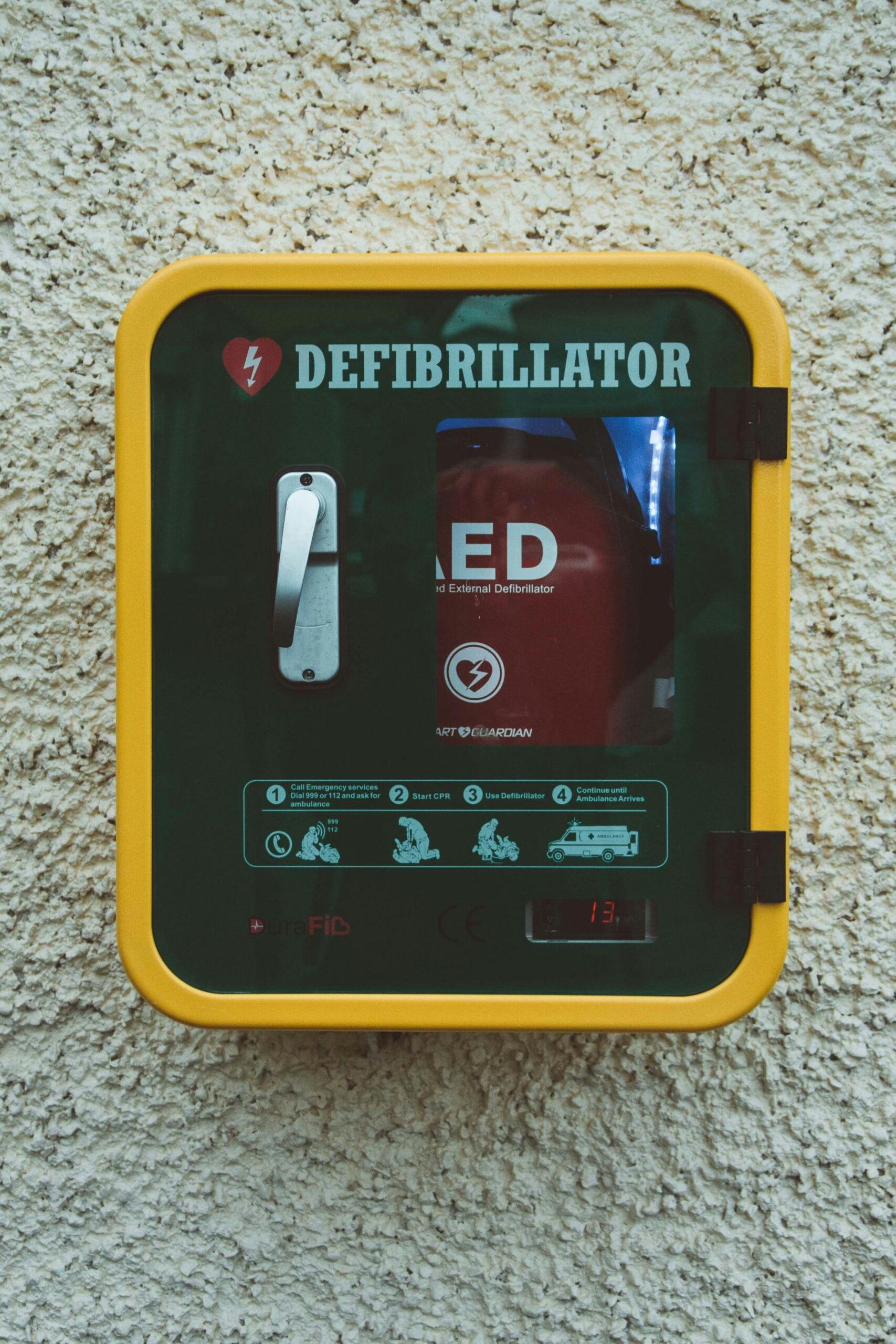
When someone experiences sudden cardiac arrest, every minute matters. Having an automated external defibrillator (AED) nearby can make a critical difference, but many schools, churches, nonprofits, youth sports programs, businesses and community organizations simply don’t have access to one.
The Champions of the Heart AED Placement Program is designed to help change that.
Through the new AED Placement & Community Impact Program, Champions of the Heart Foundation is providing AEDs to organizations that demonstrate a meaningful need and a commitment to building a sustainable CPR and AED response program.
So, if you’ve been searching for a free AED program, AED donation program, AED grant program, or financial assistance to purchase an AED, here’s what you need to know.
What Is the Champions of the Heart AED Placement Program?
Champions of the Heart Foundation is committed to increasing access to AEDs, providing Hands-Only CPR education and helping communities become better prepared to respond to sudden cardiac arrest.
The AED Placement & Community Impact Program takes that mission one step further by placing AEDs with organizations where they have the potential to protect not only employees or members, but also visitors, participants and the surrounding community.
This isn’t simply an AED giveaway.
Champions of the Heart wants each AED placement to become part of a larger culture of cardiac emergency preparedness. Selected organizations will be expected to make the AED accessible, maintain it properly, provide CPR and AED education and establish a plan for responding if sudden cardiac arrest occurs.
The goal is simple: put lifesaving equipment where it is needed and make sure people are prepared to use it.
Who Can Apply for an AED?
The Champions of the Heart AED placement program is designed to consider a wide variety of organizations and community needs.
Organizations that may benefit could include:
- Schools and educational organizations
- Churches and faith-based organizations
- Nonprofit organizations
- Youth sports programs and athletic organizations
- Community and recreation centers
- Businesses and workplaces
- Organizations that host public or community events
- Facilities used by multiple groups
- Organizations serving communities with limited access to AEDs
Champions of the Heart evaluates each application based on the potential for the AED to save lives and create lasting community impact.
That means the question isn’t simply, “Does your organization need an AED?”
It’s also, “How many people could this AED potentially protect?”
How Do You Qualify for an AED Donation?
There isn’t one qualification that automatically determines whether an organization will receive an AED.
Instead, Champions of the Heart considers the organization’s overall need, financial circumstances, accessibility, commitment to training, ability to maintain the AED and potential community impact.
Here are some of the most important factors.
Demonstrate a Meaningful Need for an AED
Organizations applying for the AED placement program should clearly explain why an AED is needed.
Consider the people who regularly use or visit your facility. That could include children, adults, seniors, athletes, employees, volunteers, customers, spectators or families.
Applicants should also consider questions such as:
How close is the nearest AED?
How long would it take to retrieve that AED during an emergency?
Has your organization experienced a cardiac emergency in the past?
Does your organization serve a geographic area or population with limited access to AEDs?
The more specifically you can explain the need, the better Champions of the Heart can understand the potential impact of placing an AED at your organization.
What If Your Organization Can’t Afford an AED?
For many organizations, the cost of purchasing an AED is a significant obstacle.
Financial need is one of the factors considered through the Champions of the Heart AED Placement Program.
Applicants should be prepared to explain why their organization needs financial assistance, why purchasing an AED independently isn’t currently feasible and whether other sources of funding have been explored.
Champions of the Heart will also consider whether the organization can take responsibility for the future costs associated with maintaining the AED.
Financial need matters, but it is only one part of the selection process.
Every Organization Needs an AED/CPR Champion
Receiving an AED is only the beginning.
Organizations selected through the program should identify an AED/CPR Champion who will help oversee the organization’s cardiac emergency preparedness.
This person doesn’t need to become a medical expert.
Instead, the AED/CPR Champion serves as the point person who helps keep the program active and the organization prepared.
The Champion should be willing to learn how to use the AED, receive Hands-Only CPR education, help develop the organization’s emergency response plan and coordinate ongoing CPR and AED education.
They can also help make sure employees, staff members, coaches, volunteers or other appropriate members of the organization know what to do during a cardiac emergency.
Champions of the Heart can assist selected organizations in developing their CPR/AED plan and educational program.
Your Organization Should Have a CPR and AED Emergency Response Plan
Where is your AED?
Who calls 911?
Who retrieves the AED?
Who begins Hands-Only CPR?
And would the people in your organization know the answers if someone collapsed today?
A strong AED program includes a plan for what happens before emergency responders arrive.
Organizations applying for an AED should have, or be willing to develop, a sudden cardiac arrest emergency response plan.
That plan should address how a cardiac emergency will be recognized, how 911 will be activated, where the AED will be located, who will retrieve it, who will perform Hands-Only CPR and how emergency responders will be directed to the individual.
It should also establish how CPR and AED education will be coordinated and how the emergency plan will be communicated throughout the organization.
Don’t have a plan yet? That doesn’t prevent your organization from applying.
Champions of the Heart can work with selected organizations to develop one.
AED Accessibility Matters
An AED can’t save a life if no one can get to it.
That’s why accessibility is an important part of the AED Placement & Community Impact Program.
Applicants will be asked to explain where the AED would be located, why that location makes sense, who would have access to it and what hours it would be available.
Champions of the Heart is particularly interested in AED placements that have the potential to benefit people beyond an organization’s immediate employees or members.
For example, an AED could potentially be available during:
- Community sporting events
- Youth athletic programs
- Parks and recreation activities
- Church gatherings
- School activities
- Neighborhood events
- Public gatherings
- Events hosted by other organizations using the facility
Organizations should consider both where the AED will be placed and who could realistically reach it during an emergency.
An AED locked away when someone needs it has very limited lifesaving value.
How Many People Could Your AED Protect?
One of the questions applicants should be prepared to answer is how many people could potentially benefit from having an AED at their location.
That number may be much larger than the number of people on your staff.
Think about everyone who regularly comes through the space: employees, members, students, athletes, coaches, customers, visitors, volunteers, families, spectators and other community members.
Applicants should provide their best estimate and explain how they calculated it.
This helps Champions of the Heart evaluate where each community AED placement could have the greatest potential impact.
CPR and AED Training Are Part of the Program
Putting an AED in a building isn’t enough.
People also need the confidence to respond.
Champions of the Heart already provides Hands-Only CPR training to schools, businesses and community organizations as part of its mission to create communities that are better equipped for cardiac emergencies.
Organizations receiving an AED should commit to building that same readiness within their organization.
That includes identifying an AED/CPR Champion, providing Hands-Only CPR and AED education, creating a plan for regular training and working to ensure that people who know how to respond are regularly present.
The organization should also consider opportunities to extend CPR and AED education into the surrounding community.
The equipment matters.
Knowing what to do with it matters just as much.
Who Is Responsible for AED Maintenance?
Organizations receiving an AED through the program are responsible for keeping the device operational and maintaining it according to the manufacturer’s requirements.
That includes scheduled inspections, monitoring expiration dates, replacing batteries and electrode pads when necessary and maintaining appropriate inspection and maintenance records.
Applicants should explain how their organization plans to cover these ongoing costs.
This requirement is an important part of creating a sustainable AED program rather than simply placing equipment that may not be ready when an emergency occurs.
When Can You Apply for an AED?
Champions of the Heart accepts applications for the AED Placement & Community Impact Program four times each year.
Current application deadlines are:
January 31
May 31
August 31
November 30
Complete applications received by the appropriate deadline will be reviewed by Champions of the Heart.
Applicants will be notified of a decision within 30 days following each application deadline.
Champions of the Heart may contact applicants for additional information or clarification when necessary.
What Happens If Your Organization Is Selected?
Organizations selected to receive an AED can work with Champions of the Heart, when needed, to establish an appropriate AED location and develop their CPR/AED education and emergency response plan.
And that’s what makes this AED placement program different.
The goal isn’t simply to put an AED inside another building.
It’s to create an organization that is prepared to respond when sudden cardiac arrest happens.
Champions of the Heart evaluates applications with five things in mind:
Need + Accessibility + Training + Sustainability + Community Impact
Each one matters.
A lifesaving device needs to be in the right place. It needs to be accessible. People need to know how to use it. Someone needs to make sure it remains operational. And the organization needs a plan for what happens when every second counts.
Looking for a Free AED for Your Organization?
If you’ve been searching for how to get a free AED, an AED donation program, an AED grant for a nonprofit, an AED for a church, an AED for a school or an AED for a youth sports program, the Champions of the Heart AED Placement & Community Impact Program may be a good place to start.
Before applying, take a look around your organization.
Where is the closest AED right now?
How long would it take someone to retrieve it?
How many people regularly use your facility?
Would your employees, volunteers, coaches, members or staff know what to do if someone suddenly collapsed?
Could an AED at your location also serve the surrounding community?
If those questions reveal a gap in your cardiac emergency preparedness, Champions of the Heart wants to hear your story.
Apply for the Champions of the Heart AED Placement Program
Sudden cardiac arrest doesn’t give you time to get prepared.
Preparation has to happen first.
The Champions of the Heart AED Placement & Community Impact Program is helping organizations put lifesaving equipment into communities while building the knowledge, training and response plans needed to use it.
If your school, church, nonprofit, business, sports organization or community facility needs an AED, now is the time to learn more and apply.
Apply for the AED Placement & Community Impact Program and help make your organization and your community better prepared to respond when a heart needs a champion.
close X


